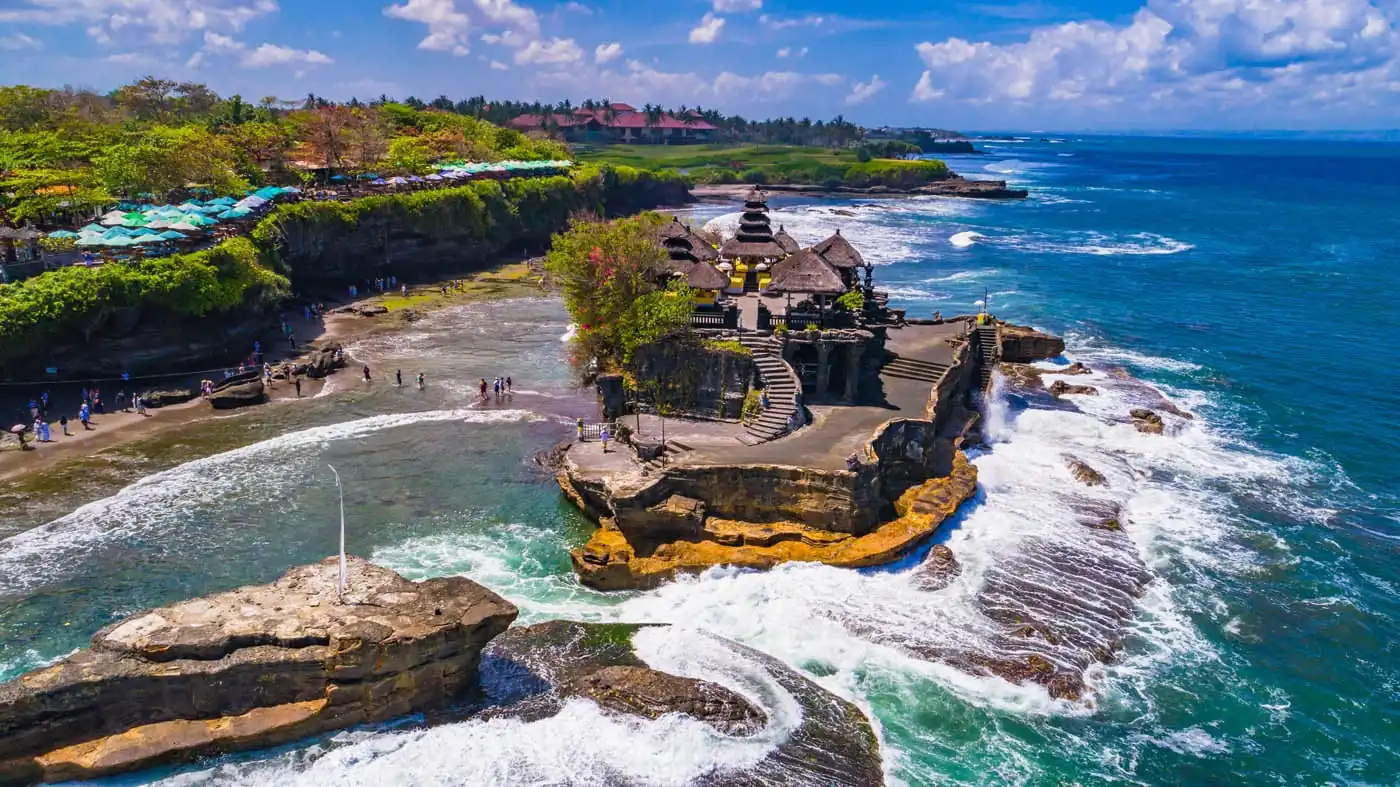
Have you ever wondered about the history and spiritual meaning of Tanah Lot Temple? Standing majestically on an offshore rock surrounded by crashing waves in Tabanan regency, Tanah Lot is not only Bali's most iconic sunset landmark but also a sacred pilgrimage center for Balinese Hindus.
In this 2026 updated travel guide, we explore the 16th-century origins of Tanah Lot Temple, the sacred legends of its venomous sea snake guardians, current 2026 entrance ticket prices, Piodalan ceremony dates, and how to get there stress-free with a private driver.
History of Tanah Lot Temple and Its Origins
The Spiritual Journey of Dang Hyang Nirartha
The history of Tanah Lot Temple begins with the spiritual journey of Dang Hyang Nirartha, a revered Hindu priest from Java who arrived in Bali in the 16th century during the reign of King Dalem Waturenggong. Traveling along the southern coast, he established several coastal temples (known as Pura Sad Kahyangan) to protect Bali from evil sea spirits.
"According to ancient palm-leaf manuscripts (Lontar), Dang Hyang Nirartha—also known as Pedanda Sakti Wawu Rawuh—felt a divine aura radiating from the ocean rock near Beraban Village and chose it as his sacred meditation site."
Beraban Village, Tabanan: The Resistance & Miracle
Initially, the local chieftain of Beraban Village, Bendesa Beraban Sakti, resisted the priest's teachings and attempted to expel him. In response to the hostility, Dang Hyang Nirartha demonstrated his miraculous spiritual power by shifting the massive rock where he meditated into the ocean, creating what is known today as Tanah Lot ("Land in the Sea").
The Legend of the Holy Sea Snake Guardians
To guard the temple from intruders and evil forces, Dang Hyang Nirartha removed his sacred scarf (poleng) and cast it into the sea. The scarf transformed into venomous black-and-white sea snakes (Banded Sea Kraits / Laticauda colubrina).
To this day, these sea snakes inhabit the small caves at the base of the rock. Local Balinese priests watch over them, and visitors can receive a blessing near the holy cave during low tide. Because sea kraits possess potent venom, visitors must observe them with respect under guidance.
2026 Entrance Fees & Visitor Information
| Category | Adult Rate (IDR) | Child Rate (IDR) | Parking Fee |
|---|---|---|---|
| Foreign Tourist Ticket | IDR 75,000 (~$4.80 USD) | IDR 40,000 (~$2.50 USD) | Car: IDR 5,000 |
| Domestic Tourist Ticket | IDR 30,000 | IDR 20,000 | Bus: IDR 10,000 |
Temple Ceremonies & Piodalan Calendar (2026 - 2027)
Tanah Lot celebrates its Piodalan (temple anniversary) every 210 days on Budha Wage Langkir. Upcoming ceremony dates include:
- July 1, 2026: Piodalan Grand Anniversary (thousands of pilgrims in traditional white dress).
- January 27, 2027: Next Piodalan celebration.
Best Time for Sunset & Transport Tips
The optimal time to arrive at Tanah Lot is between 16:30 PM and 17:00 PM. Sunset typically occurs between 17:45 PM and 18:15 PM. Because sunset traffic along the Canggu–Tabanan bypass can cause delays of up to 90 minutes, hiring a Private Car with Driver is highly recommended.
Visit Tanah Lot Hassle-Free!
Avoid driving in heavy evening traffic or hunting for parking. Hire an experienced local driver with fuel included from IDR 400,000/day. Learn more on our Bali Car Rental with Driver Page or read our 2026 booking tips!